
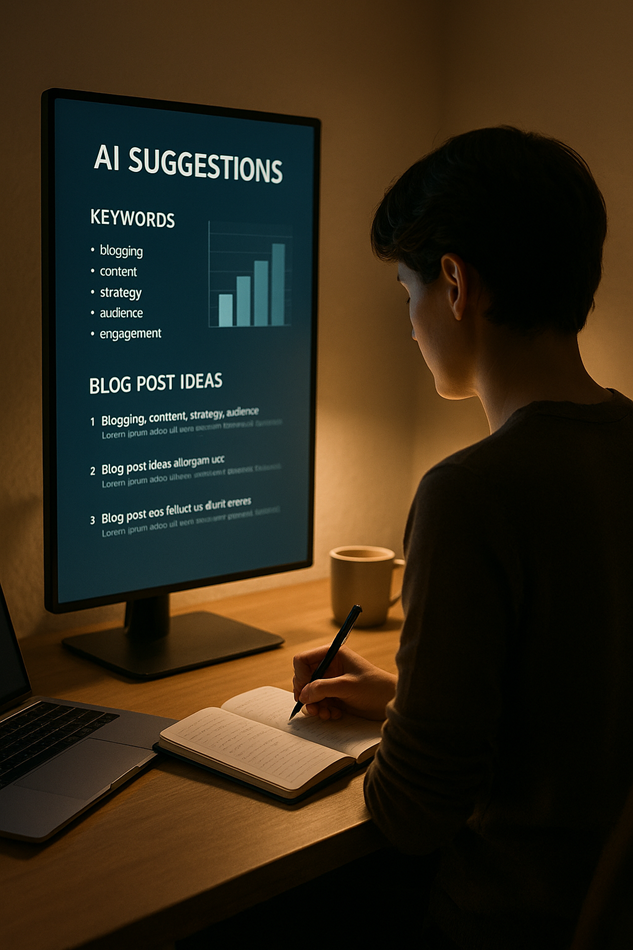
Blogging has survived every supposed “end of content” prediction over the past two decades. Social media was supposed to kill it. Video was supposed to make it irrelevant. Now, artificial intelligence has emerged as the newest contender. With tools capable of generating thousands of words in seconds, many are asking: will AI finally end blogging for good?
The truth is more complicated. AI is undeniably transforming how we write, publish, and consume content. But declaring the death of blogging misses the bigger picture. Blogging is not about simply filling pages with words—it’s about connection, authority, and perspective. AI can assist in some of those areas, but it cannot replace the human voice behind meaningful content.
The Fear of AI Taking Over Blogging
AI’s rise has triggered a wave of anxiety among writers, entrepreneurs, and business owners who rely on blogs to reach their audiences. The fear is rooted in speed and efficiency. Why pay a writer or spend hours drafting posts when an algorithm can create a polished article in seconds?
This fear isn’t new. Every communication revolution brought similar worries:
- Print was said to threaten oral storytelling.
- Radio was supposed to displace newspapers.
- Television threatened radio.
- The internet threatened them all.
Yet in each case, the medium didn’t disappear—it adapted and found a new role. Blogging faces the same crossroads today. AI won’t erase it, but it will force it to evolve.
What AI Brings to the Table
To understand whether AI can replace blogging, it’s worth examining what it actually does well.
Speed and Scale
AI tools like ChatGPT, Jasper, and Writesonic can create articles at a pace no human can match. A small business could, in theory, generate hundreds of blog posts in a single week. For entrepreneurs chasing quick visibility, the scale is tempting.
SEO Optimization
AI doesn’t just write—it analyzes. Many tools are built with keyword optimization in mind, ensuring that content aligns with search intent. What once required multiple SEO audits can now be executed in a fraction of the time.
Data-Driven Insights
AI thrives on patterns. It can quickly surface trending topics, highlight rising search terms, and suggest relevant subtopics. This helps bloggers position themselves at the forefront of what audiences are actively searching for.
But Where It Falls Short
Speed and data are impressive, but AI struggles with depth. Generated content often feels generic, lacking originality and nuance. It can summarize what’s already online but rarely introduces new insights or experiences. For readers who value authenticity and voice, AI alone leaves much to be desired.
Why Blogging Still Needs Humans
At its heart, blogging was never about publishing for algorithms. It has always been about people sharing perspectives, experiences, and ideas. That human factor is what keeps blogging alive.
Authentic Voice Matters
Readers return to blogs not because they are perfectly optimized but because they connect with the author’s voice. An AI can mimic tone, but it cannot replicate quirks, humor, or personality in a sustainable way. Niche bloggers often build loyal communities because their audiences feel like they “know” them. That kind of connection is difficult to automate.
Experience and Authority
Search engines now emphasize EEAT—Experience, Expertise, Authoritativeness, and Trustworthiness. AI lacks firsthand experience. It cannot speak from running a company, navigating challenges, or sharing personal lessons. Blogs that thrive in the AI era will be the ones anchored in lived expertise, not regurgitated summaries.
Emotional Resonance
Humans tell stories with emotion. Vulnerability, triumph, and even failure resonate because they mirror our lived experiences. AI can approximate empathy, but it lacks the core human capacity to feel what it writes. That difference is why human blogs will continue to stand out.
The Hybrid Future of AI and Blogging
Framing the debate as “AI versus bloggers” misses the larger opportunity. The real future is hybrid—where AI amplifies human creativity rather than replaces it.
AI as an Assistant, Not a Replacement
Think of AI as a research assistant. It can summarize complex reports, suggest angles, or generate rough drafts. This frees human writers to focus on refining ideas, injecting personality, and building narratives that resonate.
Content Personalization at Scale
AI also excels at personalization. For example, it can help tailor blog distribution to different audience segments. While the main article remains human-written, AI can adjust summaries, social media snippets, or email introductions to appeal to specific reader groups.
Workflow Automation
Blogging involves repetitive tasks: drafting meta descriptions, formatting headlines, creating internal links. AI can automate these, allowing entrepreneurs to spend more time on strategy, storytelling, and building authority.
How Entrepreneurs and Brands Should Adapt
AI is not a threat if you adapt. The entrepreneurs and businesses who thrive will be those who recognize AI’s role without relying on it entirely.
Focus on Differentiation
In an internet flooded with machine-written content, uniqueness is currency. What makes your perspective, story, or insights impossible to replicate? That differentiation will separate impactful blogs from forgettable ones.
Publish Less, But Better
The temptation to flood the internet with AI articles will be strong, but quality beats quantity. In fact, deep-dive blogs, evergreen guides, and thought leadership pieces are likely to perform better because they provide something AI cannot replicate—depth and authority.
Lean Into Multiformat Content
Blogging no longer exists in isolation. Podcasts, videos, and newsletters expand the reach of written content. AI can help with repurposing, but the anchor should always be a human-led blog that fuels other content channels.
The Future of Blogging in an AI-Dominated Internet
Looking ahead, blogging will not vanish, but the landscape will look very different.
The Flood of AI Content
It’s inevitable: the internet will be flooded with AI-generated posts. Some of it will be helpful, but much of it will be redundant or low-quality. This saturation risks overwhelming readers and search engines with noise.
Human-Curated Niches Will Win
Amid the flood, readers will gravitate toward trusted voices. Personal brands, niche experts, and micro-communities will thrive precisely because they are human-curated. A blog backed by real stories and authentic perspective will cut through the noise.
AI Regulation and Platform Shifts
Search engines and platforms are already exploring how to distinguish AI from human content. Labels, ranking signals, and authenticity metrics could reshape how blogs appear in search results. Those who prioritize transparency and trust will be positioned to succeed.
So, Will AI End Blogging?
The answer isn’t simple, but it is clear: AI won’t kill blogging. It will, however, kill bad blogging. Content mills, shallow posts written for clicks, and faceless corporate blogs will struggle as AI floods the web with more of the same.
But blogs anchored in human perspective, authority, and storytelling will rise in value. In a world where algorithms can generate endless words, human insight becomes the rare and precious resource. Blogging is not dying—it is entering a new chapter.
Blogging Isn’t Dead—It’s Being Reborn
AI has forced a reckoning, but it also brings opportunity. Entrepreneurs who learn to pair AI’s efficiency with human creativity will unlock new levels of reach and influence. The blog of tomorrow will not look like the blog of yesterday, but it will still exist—alive, evolving, and more vital than ever.


