

It’s a Tuesday morning in Dubai, but Hesham Zreik’s desk tells a different story.
His inbox pings from Santiago. A founder in Lagos is updating him on a pivot. A term sheet is under review in Berlin. Somewhere in the flurry of calendars, pitch decks, and engineering check-ins, Zreik makes time for a two-hour mentoring call with a solo founder in Jakarta—her first language isn’t English, and he speaks slowly, switching fluidly between Arabic and French to clarify her questions about product-market fit.
This isn’t unusual.
Zreik is the kind of operator whose calendar reads like a world map in fast-forward. But for someone who has invested in more than 400 startups and co-founded over 80 ventures himself, he carries none of the bravado you might expect. Instead, he works quietly and methodically—like a builder laying foundation after foundation, careful not to rush what needs structure.
At FasterCapital, the online incubator and venture builder he founded, Zreik isn’t interested in spectacle. His model isn’t about splashy demo days or lofty valuations. It’s about giving shape to good ideas, especially in the places and people the traditional startup world overlooks.
In an industry full of noise, Zreik is quietly redesigning how venture building operates—across borders, across languages, and most importantly, across assumptions.
The Origin Story: From Code to Capital

Before he became one of the most active venture builders in emerging markets, Hesham Zreik was writing software. Long before FasterCapital existed—even before the term “venture builder” was in vogue—he was quietly engineering mobile content at a time when phones were barely smart.
In 2002, he launched ZGroup Mobile, a tiny mobile services company that began with a shoestring budget. Less than $20 a month in revenue.
By 2005, it was valued in the millions and considered for acquisition by a public company—an unheard-of milestone for a tech startup in the MENA region at the time.
It didn’t just mark a turning point for Zreik’s career. It hinted at a philosophy that would later define FasterCapital: resourcefulness over noise, technical execution over grandstanding.
Unlike many in the startup world who enter from finance or business school pedigree, Zreik’s path was shaped by his background in software architecture and his natural inclination toward systems.
Technology wasn’t a buzzword for him—it was a tool to build things that worked. And when those things worked, he didn’t just sell and exit. He studied the patterns. He started again.
What followed wasn’t a single company, but dozens. He went on to co-found more than 80 startups across industries, regions, and business models. Each venture sharpened his instincts.
Each misstep added to a quiet accumulation of insight: that the tools of entrepreneurship—funding, mentorship, development—were often locked behind walls that too few founders had access to.
FasterCapital, when it eventually emerged in 2014, wasn’t born from theory. It was built from experience.
The FasterCapital Model: Startups, Rewritten
By the time FasterCapital was founded in 2014, the startup support ecosystem was crowded with accelerators promising mentorship, exposure, and a shot at seed funding—most packaged into fixed-term programs.
Zreik wasn’t interested in replicating that. He saw the bottlenecks too clearly: founders with strong ideas but no technical team, brilliant technologists with no path to capital, and emerging market entrepreneurs squeezed out of conversations dominated by Silicon Valley logic.
So he flipped the script.
FasterCapital didn’t launch with a batch system or a press tour. It introduced something simpler—and far more radical: actual work. In a model still rare today, the firm offers “work-for-equity” partnerships. Instead of giving advice from the sidelines, it builds. It writes code. It develops products.
It creates go-to-market strategies, handles business documents, estimates MVP costs, and sources technical teams. And in return, it takes equity—becoming a co-founder, not just a consultant.
That hands-on structure removed one of the biggest hurdles for non-technical founders: access to execution. But the approach didn’t stop there. FasterCapital built a parallel funding network, matching startups with over 150,000 angel investors and 50,000 venture capital firms.
It created a funding readiness program that didn’t just offer templates—it helped revise business plans, prepare pitches, and navigate investor conversations with precision.
Behind all of it was a belief that startups shouldn’t be forced into a one-size-fits-all mold. Every founder had different gaps. FasterCapital’s job was to help close them—not with theory, but with work.
The numbers reflect the scale of that commitment: more than 744 startups supported, over $1 billion invested directly, and upwards of $2.2 billion raised through its network.
In a sea of accelerators chasing exposure, FasterCapital became something different: an infrastructure quietly powering founders who don’t need a spotlight—they need a partner.
A Different Kind of Investor: Active, Adaptive, Accessible

In a world where many investors prefer distance—letters of intent, quarterly calls, and the occasional advisory role—Hesham Zreik chose immersion. Not just in capital, but in code, product strategy, and market entry.
While most early-stage investors write checks and wait, he built an organization that could step in when things were still rough drafts and blank whiteboards.
FasterCapital doesn’t chase founders already polished for investor roadshows. It works with those still assembling their teams, clarifying their models, or struggling to turn an idea into a prototype. Many arrive without technical co-founders. Others have never pitched to an investor. The company meets them there—not with judgment, but with structure.
This hands-on posture is matched by a global mindset. FasterCapital operates almost entirely online, with multilingual communication at its core. Zreik, who speaks Arabic, English, and French fluently—and is conversational in German and Spanish—understood early on that talent is borderless, and access should be too.
Today, the firm’s operations span more than 100 countries, with regional partners, mentors, and representatives guiding local founders through the global maze of building a business.
Tech is also a quiet enabler. Behind the scenes, FasterCapital’s proprietary AI system helps match startups with investors based not just on funding preferences, but alignment—industry focus, stage fit, and investor behavior.
The goal isn’t to overwhelm founders with contacts. It’s to put the right name in front of them at the right time, with the context to make a deal happen.
That level of infrastructure isn’t an add-on. It’s the operating system. At FasterCapital, capital is only part of the investment. The rest is time, talent, and teeth.
Fixing What the Startup World Gets Wrong
Spend enough time in the startup ecosystem and a pattern emerges: the same cities, the same investors, the same narrow definitions of what a “promising” founder looks like. FasterCapital was built as a rebuttal to that.
Zreik saw firsthand how many founders, particularly outside of traditional tech hubs, were excluded before they even had a chance to begin. Not because they lacked vision or grit—but because they didn’t speak the right jargon, attend the right demo days, or know how to package their deck for a specific type of funder.
That wasn’t a failure of the founders. It was a failure of the system.
The conventional venture pipeline assumes access: to capital, to networks, to technical talent. But in emerging markets—or even in overlooked pockets of established ones—that access is uneven at best. Founders are expected to present polished business plans before they’ve had a chance to validate ideas.
They’re told to find co-founders when there’s no one in their circle with a background in product or engineering. And when they’re rejected, they’re often sent back with vague feedback and no real path forward.
FasterCapital rewired this model by treating infrastructure as the missing piece. It doesn’t just hand founders a checklist—it helps them complete it. From refining the business model to building the actual product, it offers scaffolding that doesn’t just prepare a company for growth—it enables it.
There’s also a quiet refusal to impose a rigid formula. Each startup is evaluated individually. Some need pitch support. Others need development. Some need to be completely rethought. The common thread is the willingness to go beyond theory and get in the trenches.
What Zreik and his team have created is not just a support system—it’s a challenge to the hierarchy of startup credibility. It asks what would happen if investors met founders earlier, worked with them longer, and judged them less on presentation and more on progress.
Leadership in a Fragmented World

Running a global operation from behind a screen might sound effortless in theory—until the real work begins. Building a distributed team across time zones, languages, and cultural contexts isn’t just a logistical challenge. It’s a test of clarity, trust, and conviction.
At FasterCapital, Zreik doesn’t lead from a podium. His influence shows up in infrastructure—in how decisions are made, in how feedback loops are structured, in how founders feel heard even when they’re half a world away. The culture isn’t loud, but it’s deliberate: collaborative, responsive, and rooted in the idea that leadership should be a function, not a performance.
When the pandemic disrupted economies and shuttered offices, many early-stage firms paused or pulled back. FasterCapital didn’t just survive that period—it accelerated. The remote-first foundation allowed it to absorb the shock and keep operating at scale. More importantly, it kept showing up for founders when other sources of support went quiet.
But for Zreik, the challenge isn’t speed. It’s complacency. He’s spoken openly about his fear of stagnation—that as soon as an organization believes it has figured out the model, it starts missing the signals that matter. Markets shift. Needs evolve. The models must keep pace.
That kind of constant recalibration demands more than ambition. It requires stamina. And in the quieter corners of leadership—the long hours, the silent pivots, the decisions that don’t make headlines—Zreik’s consistency becomes visible.
It’s also what makes the role lonely at times. The final calls often rest on one desk. But at FasterCapital, that desk never feels distant. Founders, teammates, mentors—they’re all in the loop. And in a fragmented world, that kind of connected leadership still matters.
Looking Ahead: Deep Tech, Smart Capital, Global Talent
For Hesham Zreik, the future doesn’t hinge on buzzwords—it depends on precision. While AI, blockchain, and other frontier technologies dominate headlines, his focus remains practical: how can these tools help founders solve real problems, faster and more intelligently?
FasterCapital is already moving in that direction. Its AI-driven investor matching system is just one example—a behind-the-scenes engine designed to cut through noise and save founders months of dead-end outreach.
But beyond the tools, Zreik sees the bigger shift: a global migration of talent, where the most promising startups aren’t clustered in a few cities but scattered across emerging markets, second-tier hubs, and entirely new geographies.
It’s not just where founders live. It’s how they build. Remote work isn’t a novelty anymore—it’s the default. And with it comes a fresh set of demands: new hiring practices, new infrastructure needs, new market entry strategies.
FasterCapital isn’t waiting for those trends to stabilize. It’s adapting in real time—offering founders more flexible, localized, and vertical-specific support.
The firm is also expanding its footprint beyond capital and code. Programs focused on IP monetization, mega-project financing, and UAE-based business setup are now embedded in its offerings—not as standalone services, but as part of a wider blueprint for scalable, sustainable growth.
It’s the kind of structure that appeals to founders thinking long-term—not just about raising a round, but about building a company that endures.
Upcoming appearances at the Global Entrepreneurship Club’s roundtables and summits signal Zreik’s increasing presence in thought leadership circles. But his gaze remains grounded. He’s less interested in being quoted and more focused on continuing the work: bridging founders to the tools, teams, and traction they need to compete on a global stage.
In his world, innovation isn’t a wave to ride but a system to engineer.
Precision Over Noise
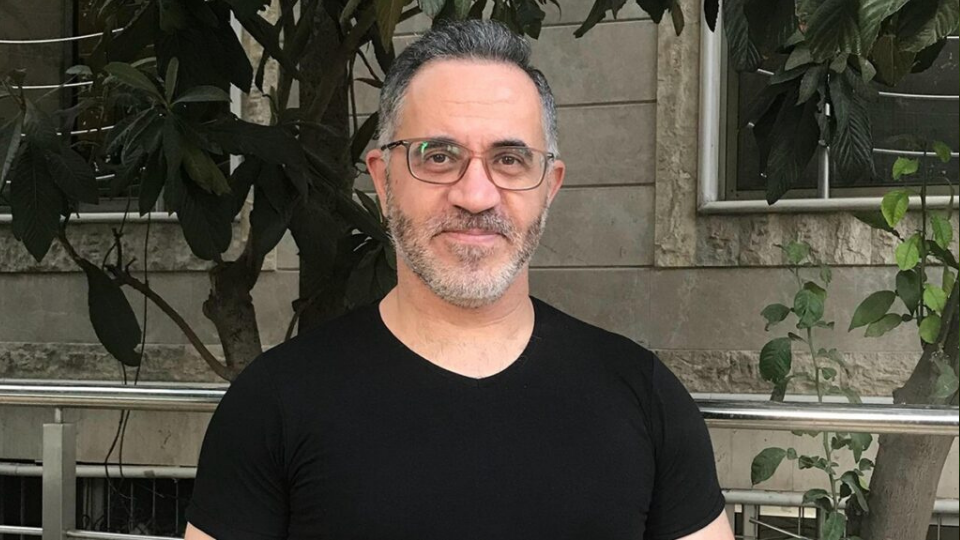
There’s a kind of gravity in the way Hesham Zreik operates—measured, deliberate, unshaken by the tempo of trend cycles or the spotlight chasing them. He doesn’t build for virality. He builds for continuity.
And that might be the most radical thing about him.
In an ecosystem that often rewards hype over infrastructure, Zreik has built a platform where founders don’t need to perform their potential. They need to show up, do the work, and find a partner who’s willing to do it alongside them. FasterCapital isn’t loud, but it is large—its reach, its network, its footprint across regions rarely mapped on a venture firm’s radar.
There’s no need for catchphrases or startup theater here. What Zreik has architected is a blueprint for venture building that feels unusually human: responsive to geography, grounded in execution, and rigorous about fit.
It doesn’t promise every founder a win. But it gives them something rarer—structure, clarity, and time to build the kind of company that doesn’t just launch but lasts.
The work is never finished. That’s the point. And in Zreik’s world, progress isn’t marked by headlines. It’s marked by what gets built when nobody’s watching.


